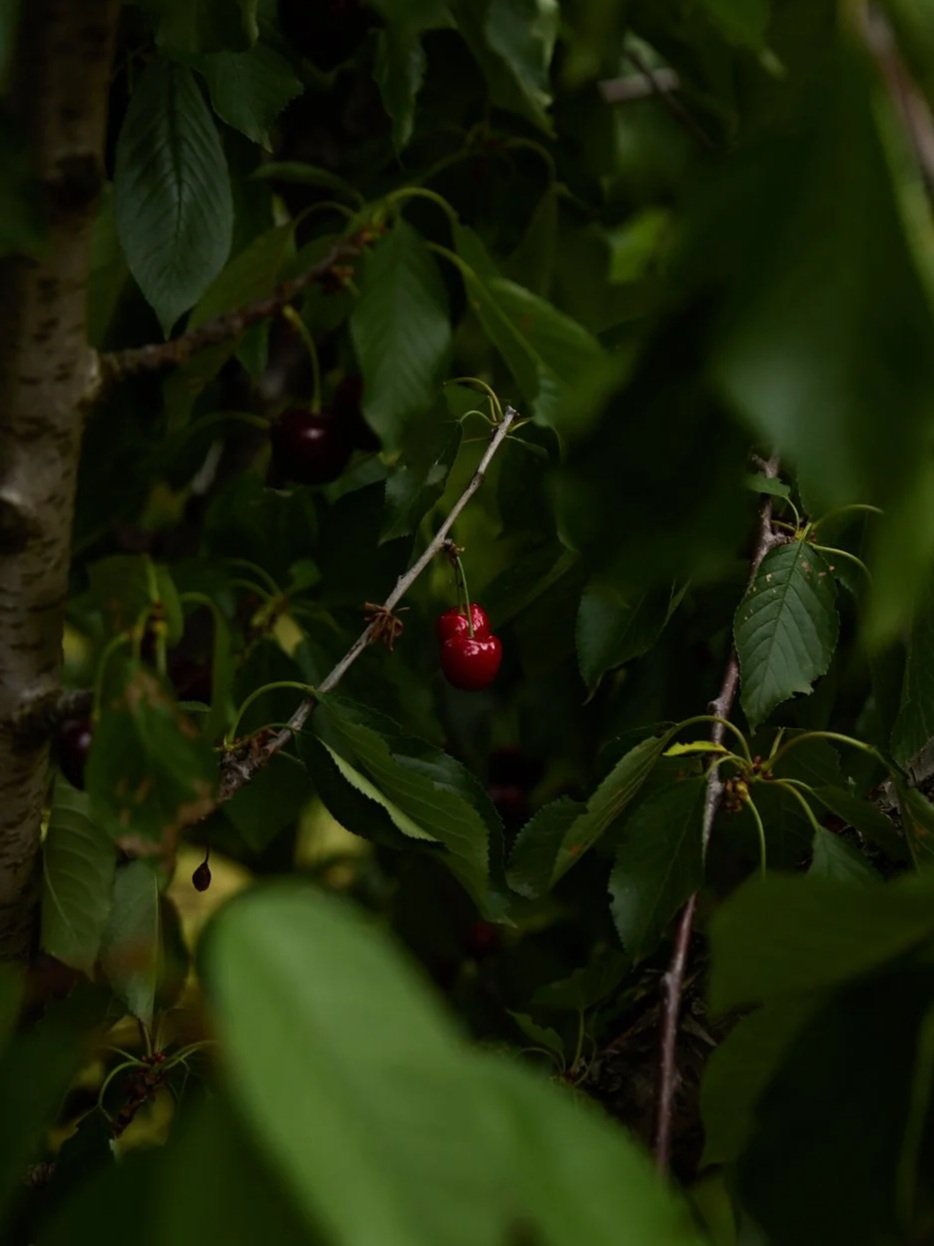
Regenerative cherry farming at Hall family Orchards
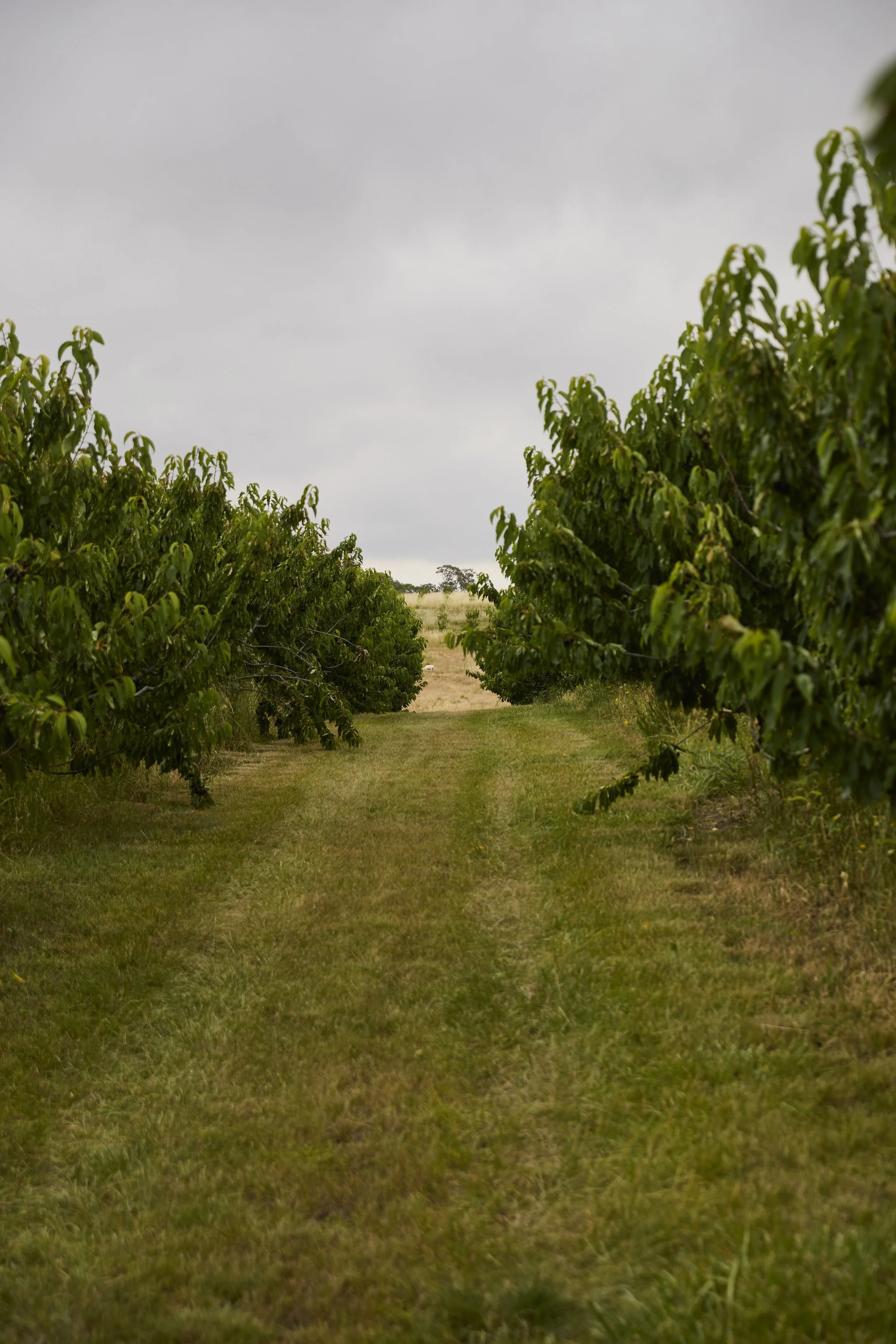
Wombat NSW Wiradijuri Land Photo by Josh Crocombe Dec 2025
After years of research, in 2018 Chris fully committed to a regenerative practice.
“I’m Chris Hall, and I’m a regenerative cherry grower. I’ve been growing cherries my whole life!”
Chris’ grandfather, Jaspar Hall planted the first cherries on the family farm in 1962. After completing a degree in Horticultural Science, Chris and his wife purchased an adjourning cherry orchard, originally planted in 1961 and owned by his great uncle Roy Hall. In 2018, they decided to go completely chemical free, fully converting to a biological path.
Q: What made you switch to regenerative practices?
“There wasn't really one single moment, there were a couple of big drivers. When I bought this orchard, I had major salt issues, and I heard microbes could help break them down. Good microbes can also increase the flavour, which is probably our most important factor and why I really wanted to practice regen and use beneficial microbes.
Another driver was I wanted to do things naturally, and I had concerns about chemicals when I was spraying them. I noticed that some had nasty side effects on my body when I was spraying. So I started to question the overall impact of using chemicals on my cherries when they would eventually be eaten by my family, and my customers.
It’s amazing what mother nature can do. She doesn't need chemicals, she doesn't need synthetic fertilisers, so I wanted to mimic that, using microbes to be my little fertiliser factory and to control pests and disease…and just get everything as healthy as I can, then health can pass on from the trees, to the fruit, then to us! And make us healthier people.
As farmers, we know if we have a healthy well-balanced pasture we will see the benefit in our livestock in terms of their health, weight gain, and a shiny coat.
I don't think there's a lot of people realise how important it is to consume good food. We are often encouraged to wash fruit and vegetables purchased from the supermarket, but by this stage it is too late as the fruit has already absorbed the chemicals (e.g. fungicide and insecticides).”
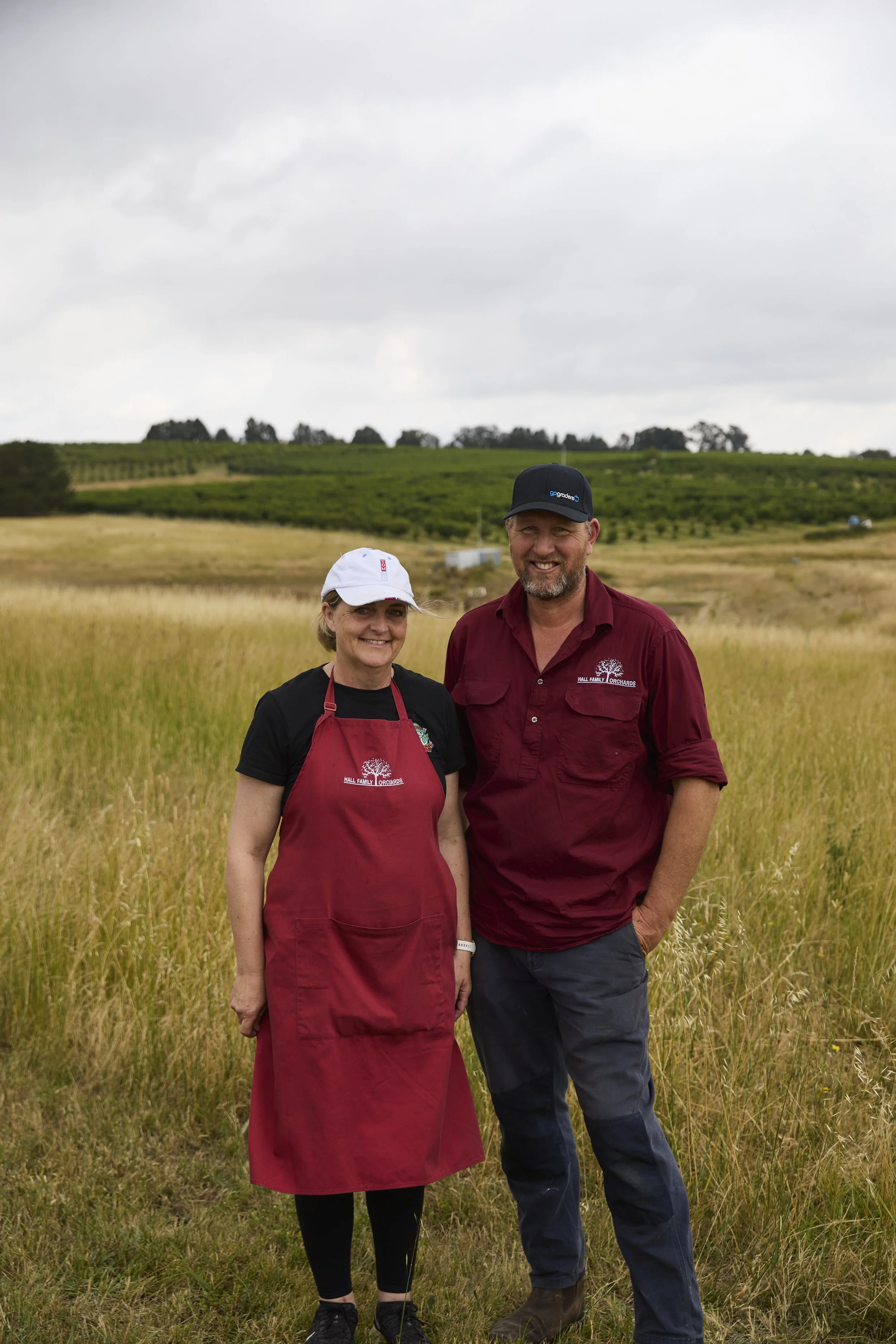
Lee and Chris Hall
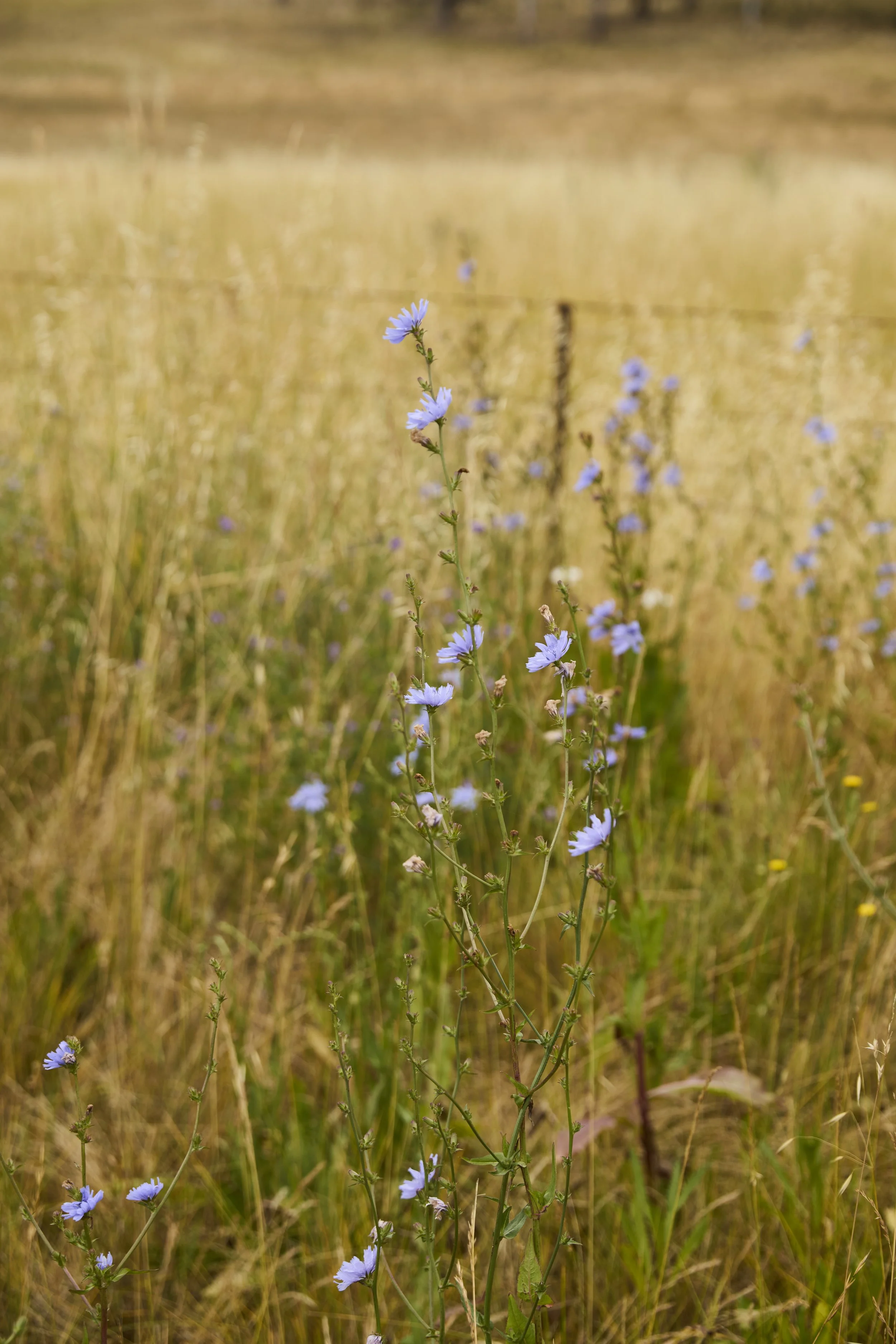
Q: How are cherries pollinated?
"We have our own bee hives, about 1 to 2 hives per hectare. I’ve had them about four years now, and I have blocks that pollinate at different times throughout the growing season: an early block, a second block, and then a third that flowers later, just to spread the risk out.
What I’m finding now using regenerative practices is that other insects play a major role too. Some of the wild bee population has been affected by the Varroa mite, reducing the wild bee population in the area, and wiping out a few of our bee hives. So hoverflies are doing a brilliant job this year.
When we first started flowering, the orchard was dead quiet, and I was starting to get worried because usually the hover flies start to come in early too, but then on about day three, which is when the flowers are probably more viable, the hoverflies just came in from everywhere. Even last year when we had a lot of bees, the hover flies would probably outnumber the bees by 10 to 1.
Two or three years ago we had really cold pollination weather and the bees were only coming out at the best by 11:00 in the morning and going back in at 3:00. Because it was just too cold and windy for them. Whereas the hover flies were up when the sun was up and didn't go back home until the sun went down. That year we had a really good harvest, whereas others in the district had a light harvest. Many conventional cherry growers believe in the principle “if it flies it dies”. They are focused on spraying pesticides to kill insects and believe all insects are bad, but there are many insects that are beneficial for pollination such as hoverflies, lacewings, lady bugs, and bees. So I'm really grateful that I do run a regenerative system because I think it'll be a more consistent yield year to year.”
Q: Where did the microbes come from?
“So I brew up my microbes, I either brew them up in containers or I brew them up in a worm compost that I use as an inoculant to spread around the farm, and I also make my thermophilic compost (hot composting) as well as a static pile.
So different ways of making compost gives different types of microbes, thus adding those microbes to the soil and to the tree.
When there's a lot of rain about, like it has been for the last couple of days I can either use my compost mixes, or in this case close to harvesting, I'll use a commercial microbe product, I apply it directly to the tree to smother out the bad microbes.
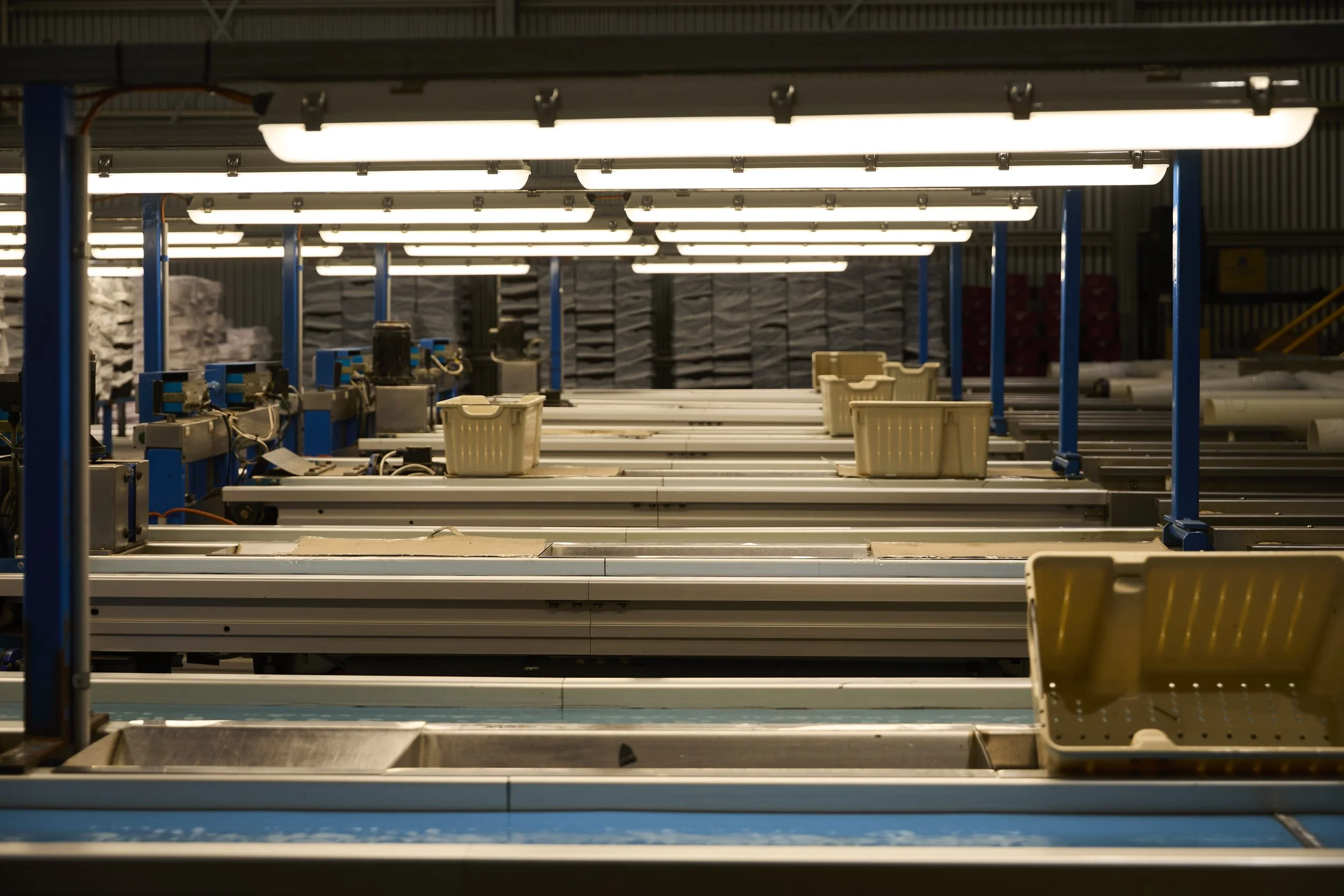
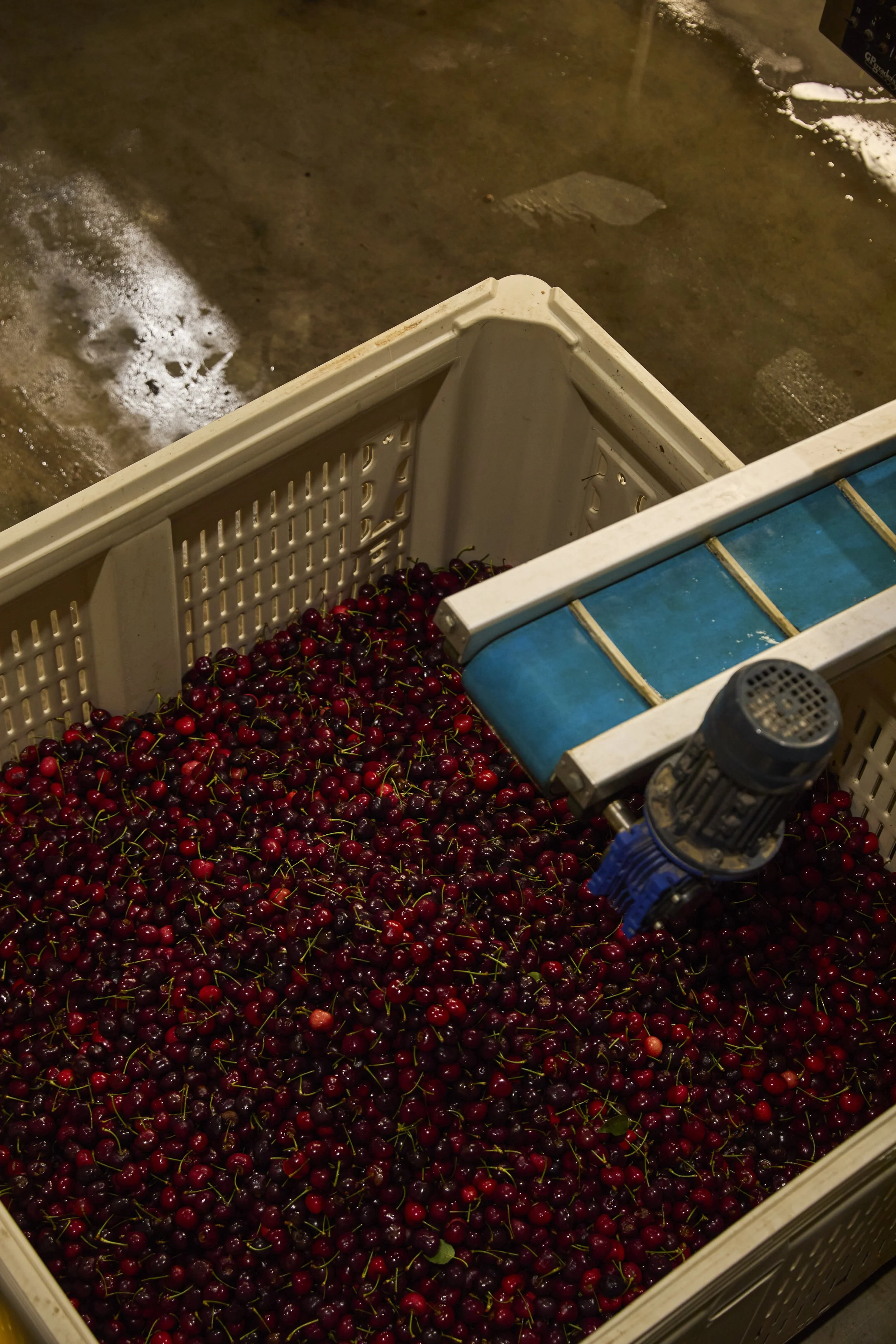
In our packing house, we also use microbes, first we wash the fruits with chlorinated water so we remove things like E. coli, then we use a microbe wash to put beneficial microbes back on. The goodies that come with those microbes play a role in protecting the fruit, giving it longer shelf life. The mix we're testing right now seems like we're doubling the shelf life over conventional ways.”
Q: What are some keys when implementing biological framing?
“Diversity is everything! That means diverse insects above ground, and a diverse mix of microbes in the soil.
Multi-species cover crops are another method to build up microbes in the soil. Which means growing lots of different plants around the orchard. Different microbes will attach to different plant roots, so by having more plants in the system, it gives you that diversity.
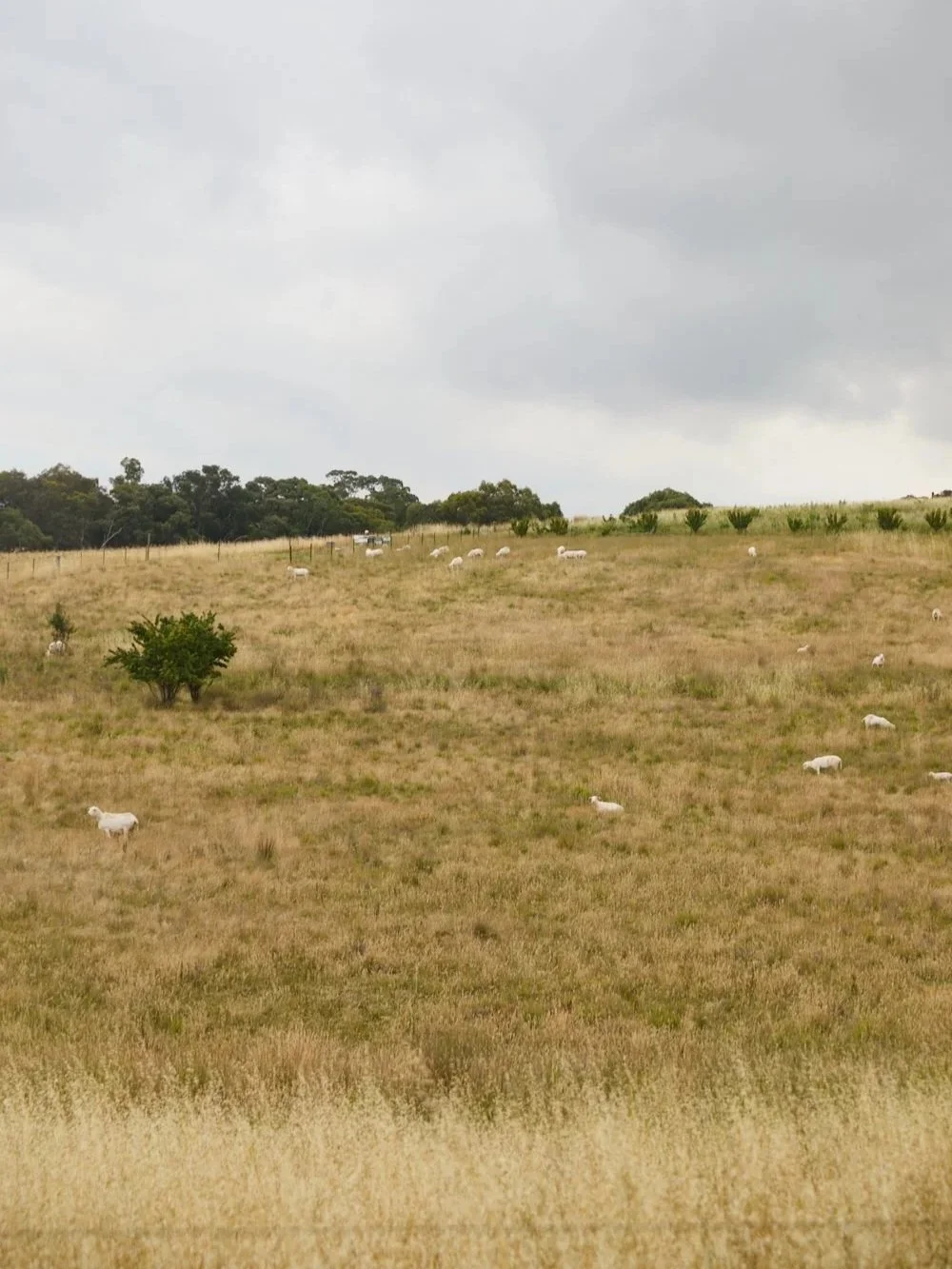
And with livestock in there, you will get more benefits. There is a lot of research in vineyards on how sheep can help build up the microbes in the soil, when you start adding sheep, everything seems to lift…I think maybe those microbes are getting moved around with the sheep, and they're also providing manure which the microbes would feed on.”
Q: When does the cherry season start?
“For us normally we tell our pickers we start from the 10th to 15th November. This year we started on the 15th of November and we tried to have everything finished before Christmas. After Christmas everyone's got enough food in their fridge, so people won’t start buying cherries again until January. Everyone wants a box of cherry on their Christmas table, so it gets busy for us, we’ve done enough work and we're pretty tired by the time we get to Christmas, and we're ready for a break ourselves.”
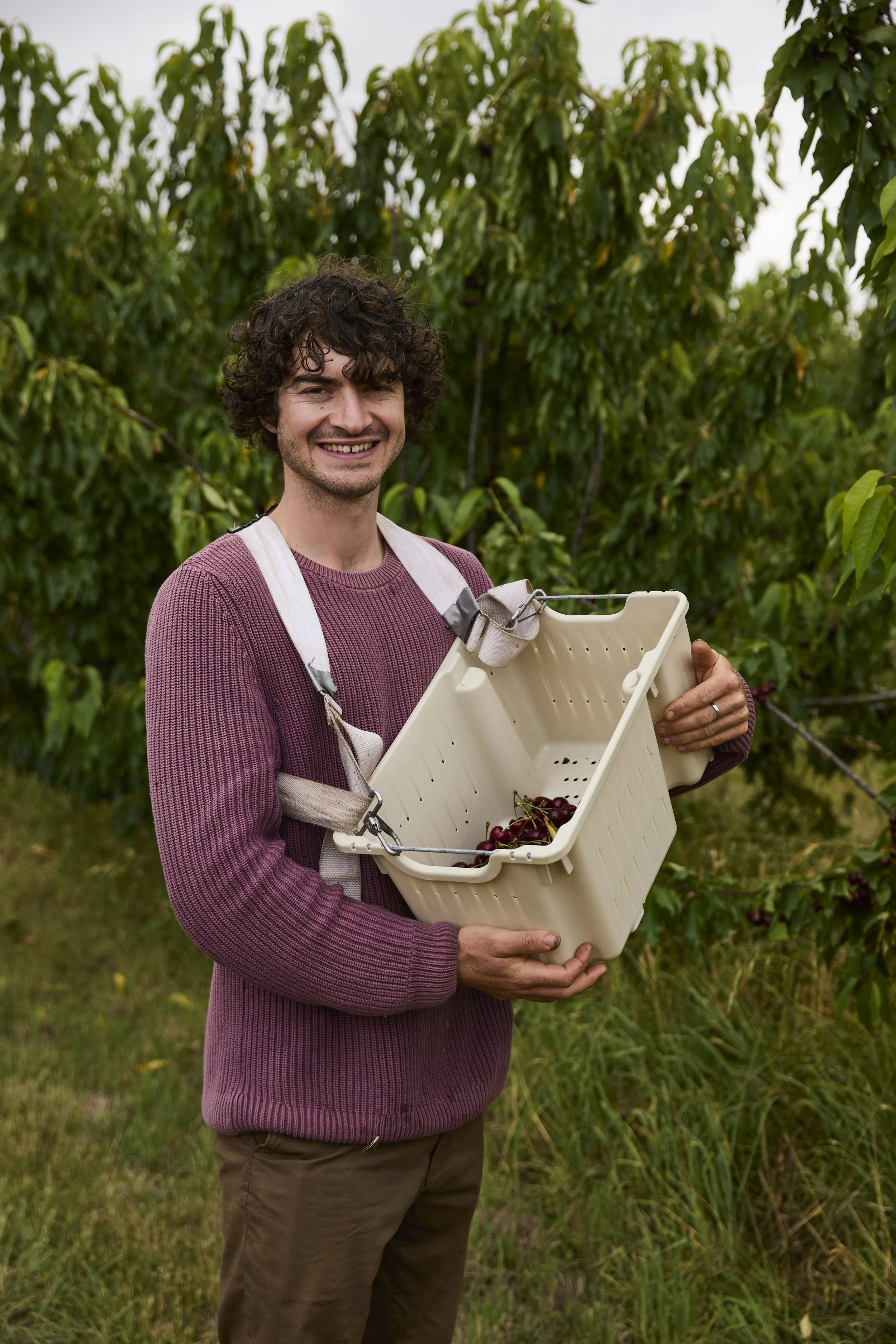
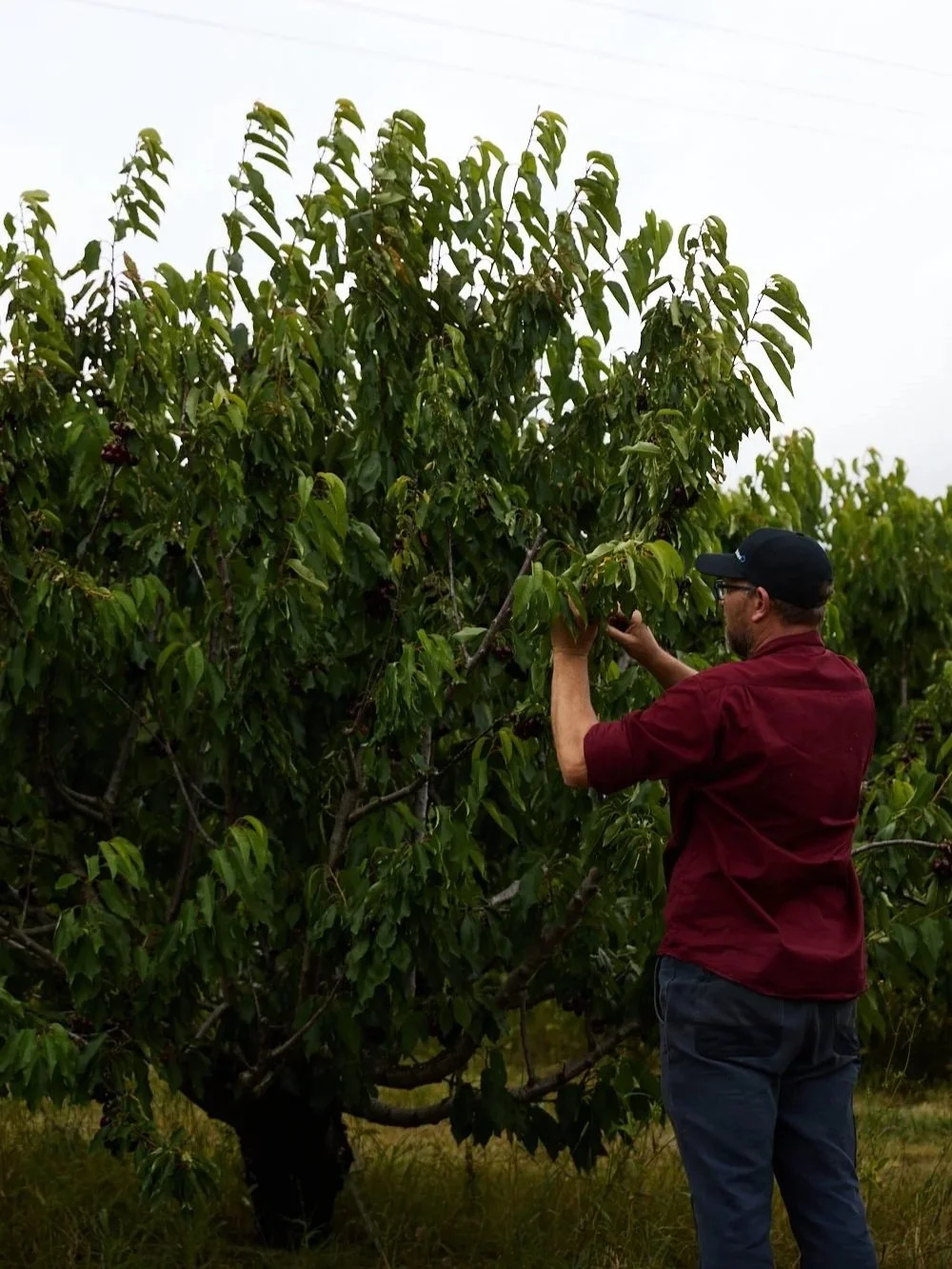
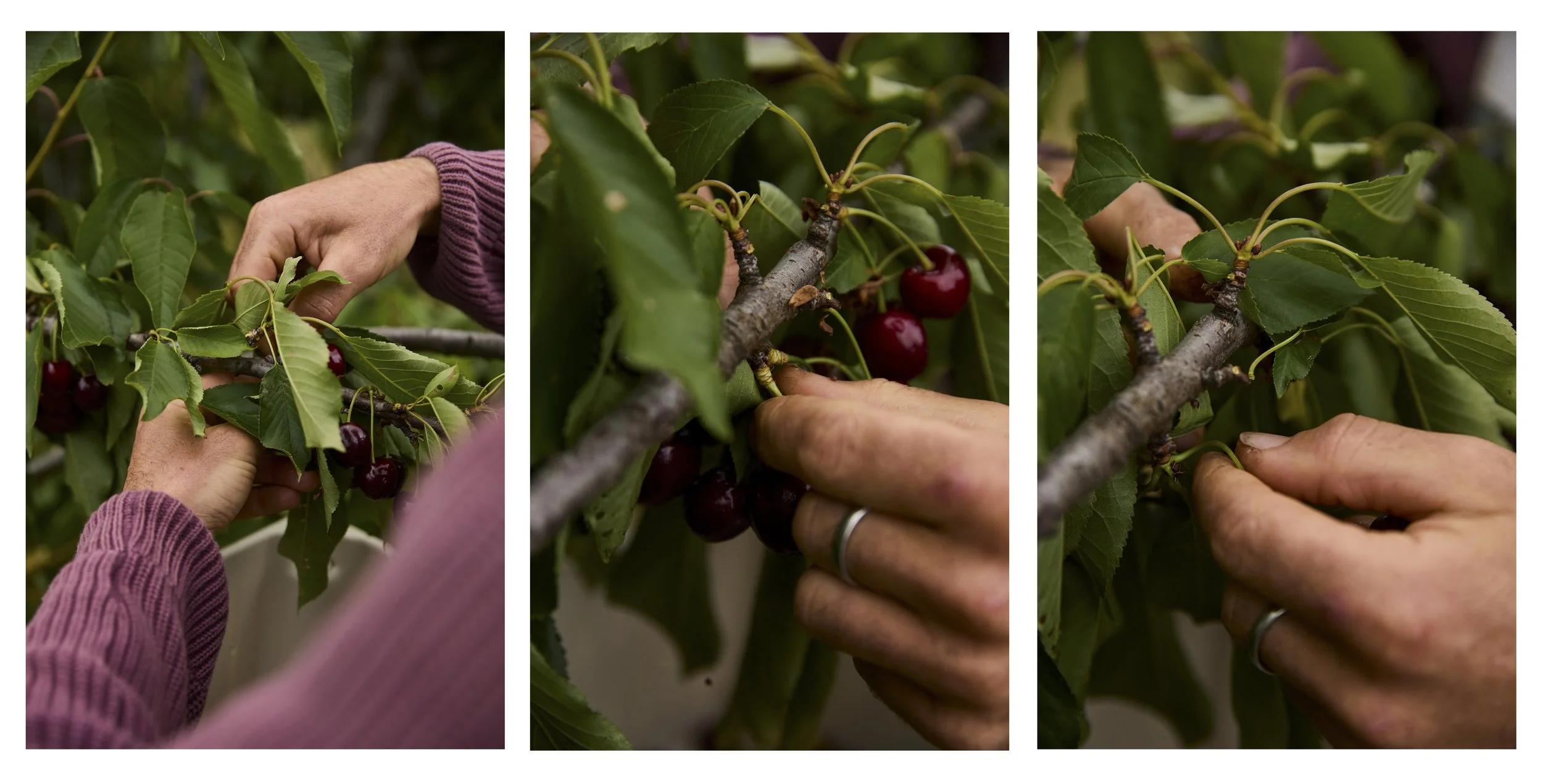
Micah picking cherry
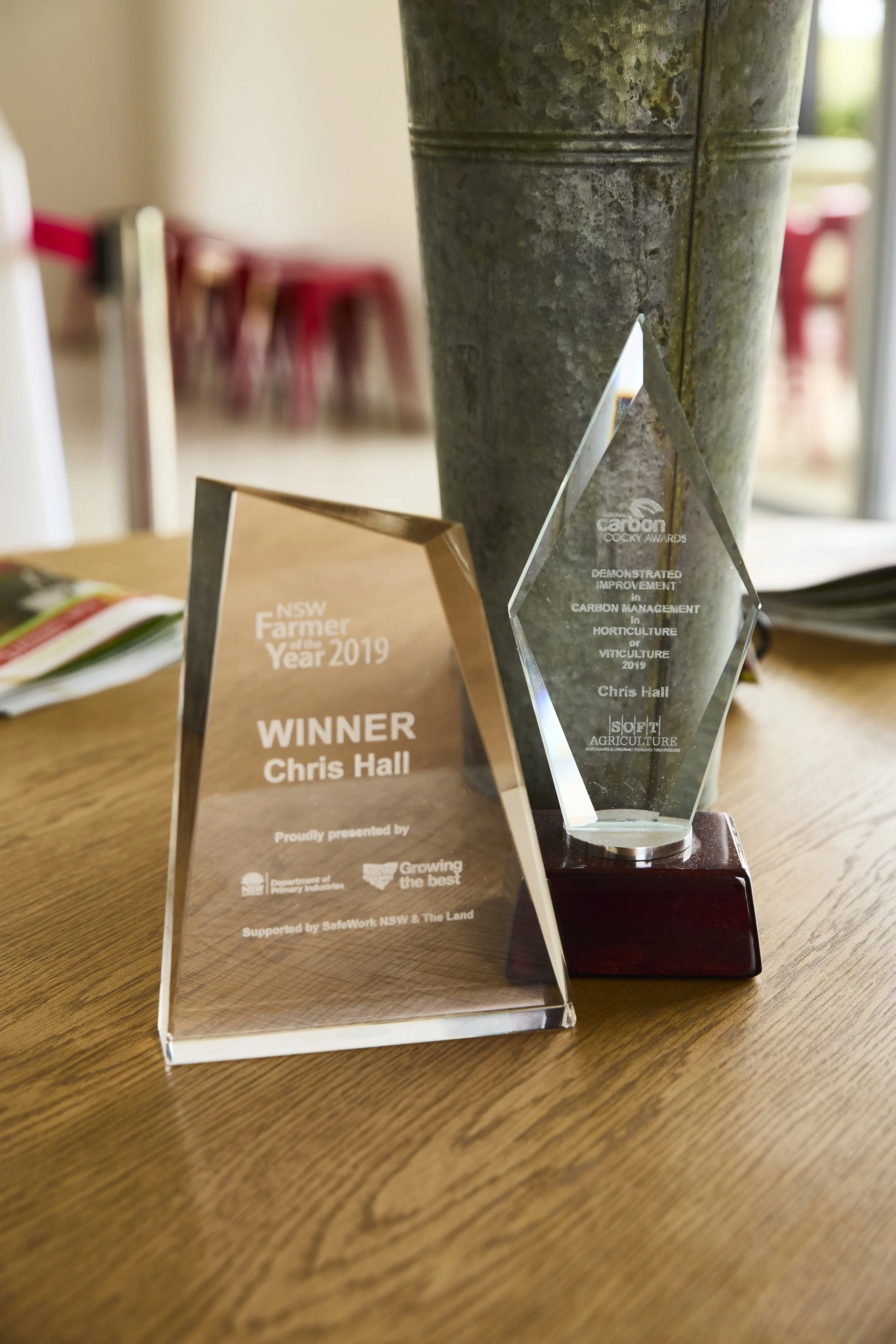
Hall Family Orchards has received numerous awards. In 2019, Chris was awarded a National Carbon Cocky Award for demonstrated improvement in carbon management in horticulture or viticulture. He was also a finalist in the National Carbon Cocky Award for outstanding performance in soil carbon sequestration. At the end of 2019, Chris was named NSW Farmer of the Year.
Chris is also involved in many projects giving voice to Australia’s regenerative food story. These include Farmers Footprint Australia, Carbon8, DPI Climate Series Smart Pilot Farmers Stories and Taste of Australia to name a few.
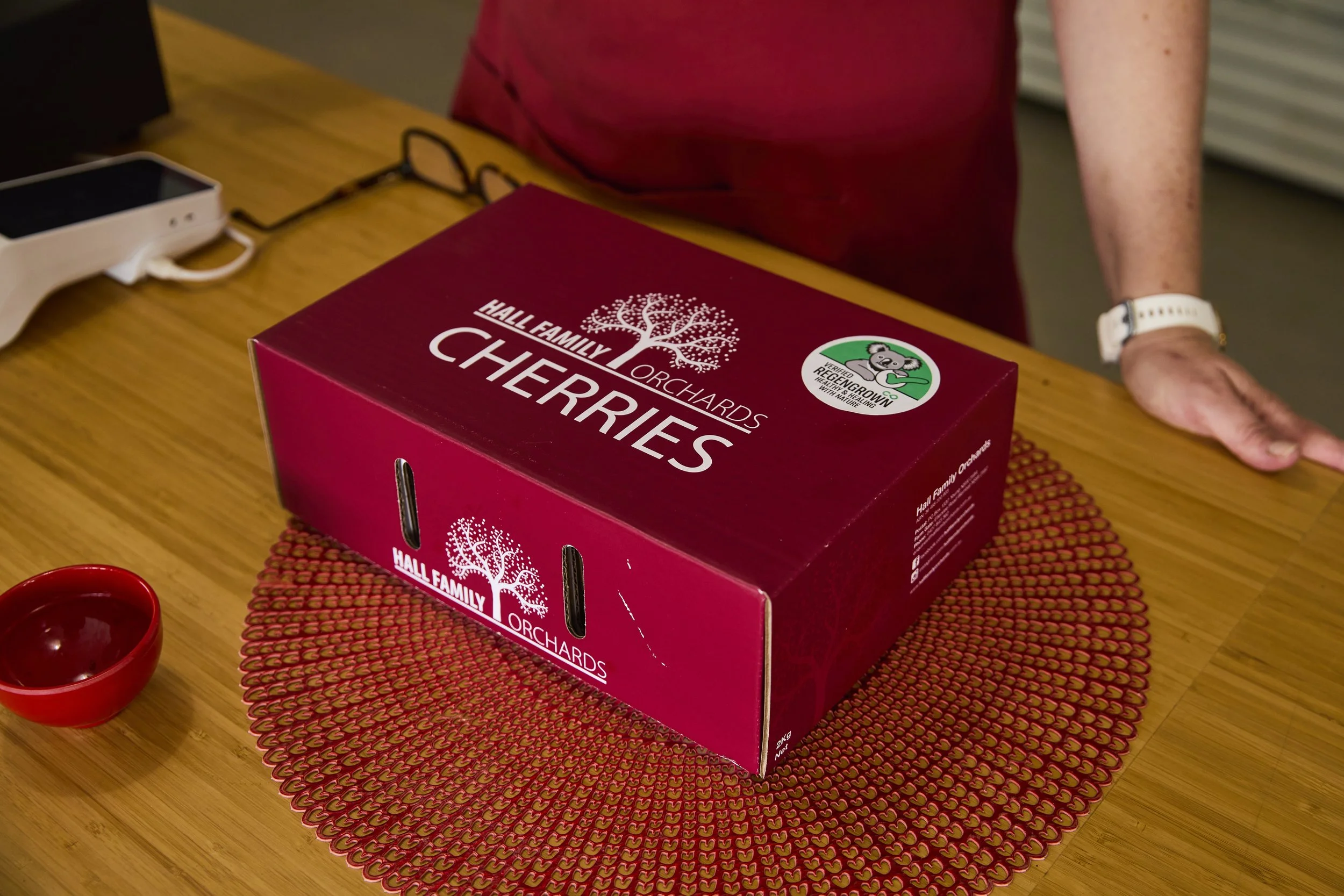
Hall Family Orchards recently achieved verification by Carbon8 as “Verified Regengrown”. This is a significant achievement as Hall Family Orchards is the first horticultural business, and more importantly, cherry grower in Australia to achieve this. The verification aims to a set a standard for farmers claiming to be regenerative.
For further information and about how to get these cherries, please visit:
https://www.instagram.com/hallfamilyorchards/
https://www.facebook.com/hallfamilyorchards/